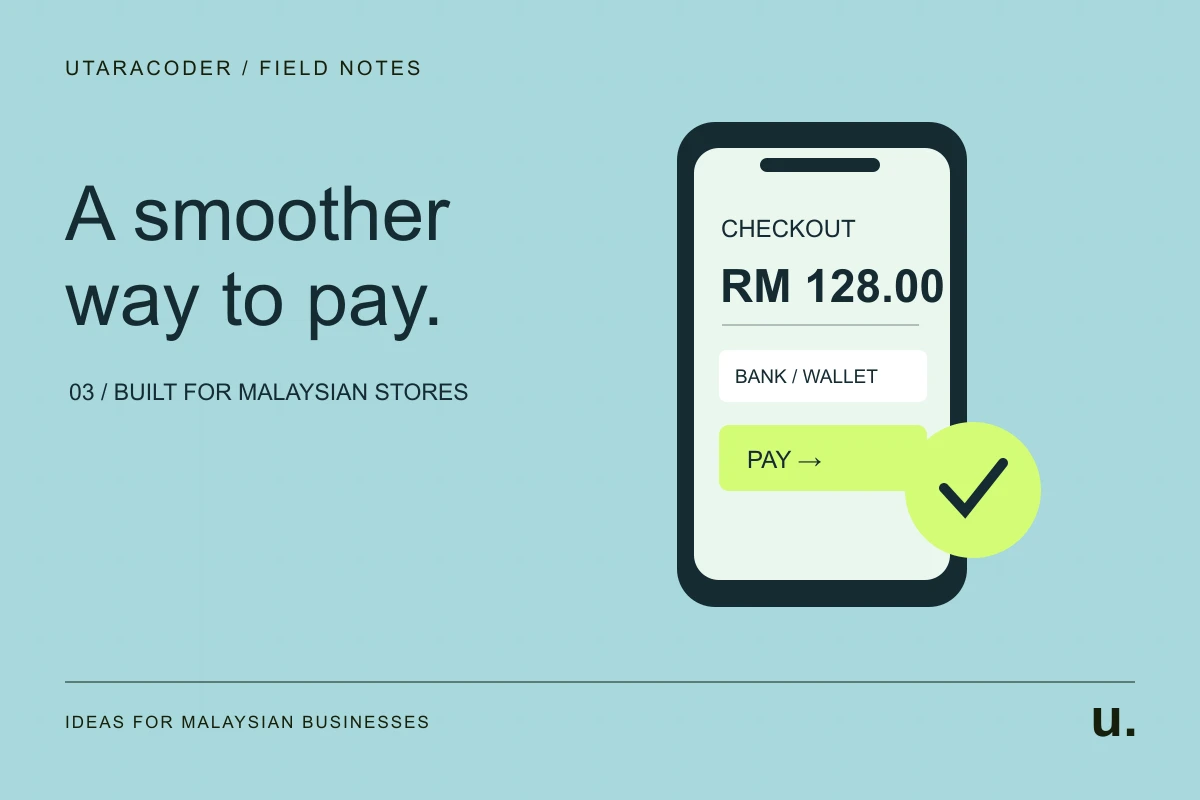
A customer has found the right product, checked the delivery charge and decided to buy. The payment step should make the next action obvious. For a Malaysian store, that means considering familiar local payment options and the operational work behind them.
Understand which payment service you need
PayNet describes DuitNow QR as a common QR payment standard and DuitNow Online Banking/Wallets as an online payment service using internet banking or participating e-money applications. They address different payment journeys.
Ask your payment provider which service your store can accept, whether it supports your ecommerce platform, and what onboarding, settlement and refund arrangements apply. Availability and commercial terms depend on the provider; a familiar logo alone does not explain the integration.
Design the moments after “Pay”
Customers need to understand when they are leaving your store to approve a payment and what happens when they return. Show a clear order reference and an accurate status. Avoid declaring an order paid solely because a visitor reaches a success page.
As an implementation requirement, ask your developer to validate the payment provider’s confirmation and handle repeated notifications without creating duplicate orders. Your chosen provider’s current documentation should determine the exact integration.
Test the awkward cases
Test cancelled approvals, slow responses, a closed browser tab and a payment that is still pending. Agree on what the customer sees and what the fulfilment team should do in each case. Include refund status and reconciliation in the handover.
On mobile, check that the total, delivery charge and available payment methods remain readable before the customer commits. A clear recovery path is as important as a smooth successful payment.